
Asset Allocation 101: Cash, Bonds, Stocks & Alternatives | Ep 25



A team to guide you
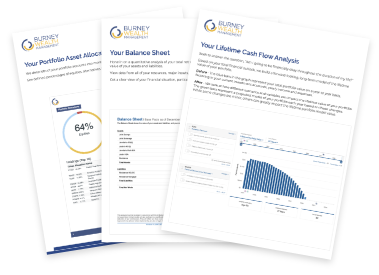
Our team of advisors guide you through various retirement scenarios, quantify your goals and plan for life’s uncertainties before crafting a retirement plan that aligns with the future you envision.

Watch or listen to the episode below:
Asset allocation is one of the most important investment decisions you'll make. More than which stocks to buy or when to rebalance, how you divide your portfolio across major asset classes determines most of your long-term results and your ability to stick with your plan during market turbulence.
This week's episode covers the foundations of asset allocation: what it is, how to determine yours, and the role each building block plays in a well-constructed portfolio.
The Two Inputs That Matter Most
Before discussing what to invest in, you need to understand what should drive your asset allocation decision. Two factors matter above all else:
First, your personal risk tolerance. How much volatility can you actually stomach? This isn't about what you think you can handle during calm markets. It's about how you'll react when your portfolio is down 30% and every headline screams that worse is coming.
People make allocation decisions in a "cold state" - calm, rational, working with their advisor through risk questionnaires. Then markets sell off and suddenly they're in a "hot state" where fear takes over and rational thinking evaporates. Your asset allocation needs to prevent you from making the worst possible investment mistake: selling out during a decline.
Second, your portfolio's income needs. If you need to withdraw 6-7% of your portfolio value annually to fund living expenses, you can't take as much risk as someone only withdrawing 1-2%. The higher your distribution needs relative to portfolio size, the more conservative your allocation should be to avoid selling during market lows.
This is why age-based rules like "subtract your age from 100 to get your stock allocation" fail spectacularly. An 80-year-old with minimal spending needs can handle more risk than a 60-year-old living largely off portfolio distributions.
Cash: The Emergency Fund That Isn't an Investment
Let's address cash first because many investors hold too much of it in their portfolios.
Cash serves an important role: emergency reserves. Three to six months of living expenses in readily accessible cash makes sense. Beyond that emergency fund, cash doesn't belong in investment portfolios.
The benefits seem attractive. Cash is stable and it's liquid. With recent rate increases, it actually pays something again - maybe 3-4% in money market accounts or high-yield savings.
But cash has a flaw for long-term investors: inflation. Cash might barely keep pace with inflation in the short term during periods of high interest rates. Over longer periods, it consistently loses to inflation. That 3% yield sounds decent until you realize historical inflation averages near 3%. You're running in place at best, slowly going broke at worst.
The opportunity cost compounds this problem. Every dollar in cash is a dollar not invested in assets with higher expected returns. Over decades, that difference becomes enormous.
Cash belongs in checking accounts and emergency funds, not investment portfolios. For portfolio purposes, we limit cash to roughly 1% purely for rebalancing flexibility.
Bonds: The Balancing Act
Bonds serve as portfolio stabilizers. They sit between cash and stocks on the risk spectrum, offering more yield than cash with less volatility than stocks.
When you buy a bond, you're lending money to a government or corporation for a set period. They pay you interest along the way and return your principal at maturity. Simple concept, but the bond market is massive and complex.
Bonds provide two key benefits. First, they generate income through interest payments, typically higher than cash yields. Second, high-quality bonds tend to hold up better than stocks during market corrections, providing stability when equities sell off.
The caveat: "tend to" is doing heavy lifting there. The 2022 bond market selloff reminded everyone that bonds aren't risk-free. But 2022 was an anomaly where both stocks and bonds fell together. Throughout history, high-quality bonds have generally provided ballast during equity turbulence.
Two primary risks affect bonds: credit risk and interest rate risk.
Credit risk is straightforward - will the borrower pay you back? This is why we focus on investment-grade bonds. Corporate bonds get letter grades. You want As, not Bs. Government treasuries eliminate credit risk since they're backed by the US government's ability to tax and print money.
Interest rate risk is trickier. Bond prices and interest rates move inversely. When rates rise, existing bonds lose value because new bonds pay higher rates. When rates fall, existing bonds gain value because their fixed payments become more attractive.
We saw this brutally in 2022. The Fed aggressively raised rates to combat inflation. Even ultra-safe Treasury bonds fell 15% in value because of interest rate risk, not credit concerns.
This inverse relationship creates opportunities, too. As the Fed cuts rates now, longer-term bonds benefit through price appreciation on top of their yield. This is why we've favored extending duration from short-term to intermediate-term bonds - to capture that price increase as rates decline.
For portfolio purposes, we prefer intermediate-term, investment-grade bonds. Short enough to limit interest rate risk, high quality enough to eliminate credit concerns, long enough to provide meaningful yield and diversification benefits.
Stocks: The Long-Term Growth Engine
Stocks represent ownership in companies. You're buying a claim on future earnings. Those future earnings are unknowable, which creates volatility. Companies surprise on the upside and downside constantly.
The reward for accepting that volatility is higher expected returns. US stocks have historically averaged around 10% annually. You almost never actually get 10% in any given year, but through all the ups and downs, that's where it averages out.
The volatility is real and frequent. Expect a 10% decline roughly once per year. Expect a 20% bear market about once every five years. This is normal stock market behavior, not a crisis.
This is why everyone overreacted to the Fear & Greed Index hitting "extreme fear" over a 5% pullback recently. Five percent barely qualifies as noise. It's half of what we expect annually. Calling it "extreme fear" reveals more about media incentives than market reality.
If you can't stomach watching your portfolio decline 30-40% during bear markets, a high stock allocation isn't appropriate. This isn't about age or time horizon alone, it's about your ability to stay invested during declines.
But here's what makes stocks powerful for long-term investors: volatility decreases dramatically over longer time horizons. In any given year, stocks can swing wildly. Over 20-year rolling periods, the range of outcomes narrows significantly and becomes surprisingly consistent.
This is why stocks remain essential for most investors. They're the only asset class with a strong historical track record of meaningfully outpacing inflation over long periods. Average inflation runs about 3%. Average stock returns run about 10%. That 7% real return cushion compounds powerfully over decades.
The stock market isn't just US large-cap companies either. You have large, medium, small, and micro-cap stocks with varying characteristics. Some pay dividends, others reinvest everything for growth. Nearly half the global investment opportunity exists outside the US.
A properly diversified stock portfolio can include international exposure alongside US holdings, capturing the full spectrum of global economic growth.
Alternatives: Diversifiers, Not Home Runs
Alternatives are anything that isn't stocks, bonds, or cash. This includes everything from private equity to managed futures to stamp collections.
Investors view alternatives two ways. Some chase alternatives for excess returns far above equity performance. Others use alternatives as diversifiers - investments that behave differently than stocks and bonds, providing portfolio stability during market stress.
We fall firmly in the second camp. Unless you're CalPERS or Yale's endowment with access to top-tier managers, chasing alpha through alternatives rarely works. But alternatives as diversifiers make sense for the right investors.
The alternatives we use today include private credit, private equity, and managed futures. Each serves a specific diversification purpose.
Private credit provides exposure to corporate lending in ways that can hedge against the interest rate risk of public bonds. Private equity captures the trillions of dollars in opportunity among companies that stay private longer or never go public at all. Managed futures employ trend-following strategies across multiple asset classes, with the flexibility to go long or short based on market conditions.
During historical crisis periods like the 2008 financial crisis and the 2022 correction, certain alternative strategies held up exceptionally well precisely because they weren't behaving like stocks and bonds. They capture different risk factors: private market opportunities, currency movements, commodity trends.
The trade-offs are real. Alternatives are more expensive and they require significant due diligence. Manager selection matters enormously - the gap between great and mediocre alternative managers dwarfs the gap in traditional asset classes. Many alternatives also have limited liquidity, locking up capital for years.
This is why alternatives aren't appropriate for everyone. You need sufficient liquid assets elsewhere, a long enough time horizon to ride out lockup periods, and comfort with the unique risks involved.
For investors who check those boxes, alternatives in appropriate doses can enhance portfolio resilience during periods when stocks and bonds struggle simultaneously.
Putting It All Together
Asset allocation isn't about predicting next year's hot performer. It's about building a portfolio you can stick with through all market environments while achieving your long-term goals.
The right allocation balances your personal risk tolerance with your portfolio's income needs. It combines cash for emergencies, bonds for stability and income, stocks for long-term growth, and potentially alternatives for additional diversification.
This decision deserves thoughtful annual review. Not constant tinkering based on headlines, but periodic reassessment as your life circumstances and financial needs evolve.
If your portfolio is growing over time and you can sleep at night when markets sell off, you've probably gotten your asset allocation right. That's the goal.
Listen to the full conversation on Long Story Short:
The Burney Company is an SEC-registered investment adviser. Burney Wealth Management is a division of the Burney Company. Registration with the SEC or any state securities authority does not imply that Burney Company or any of its principals or employees possesses a particular level of skill or training in the investment advisory business or any other business. Burney Company does not provide legal, tax, or accounting advice, but offers it through third parties. Before making any financial decisions, clients should consult their legal and/or tax advisors.

