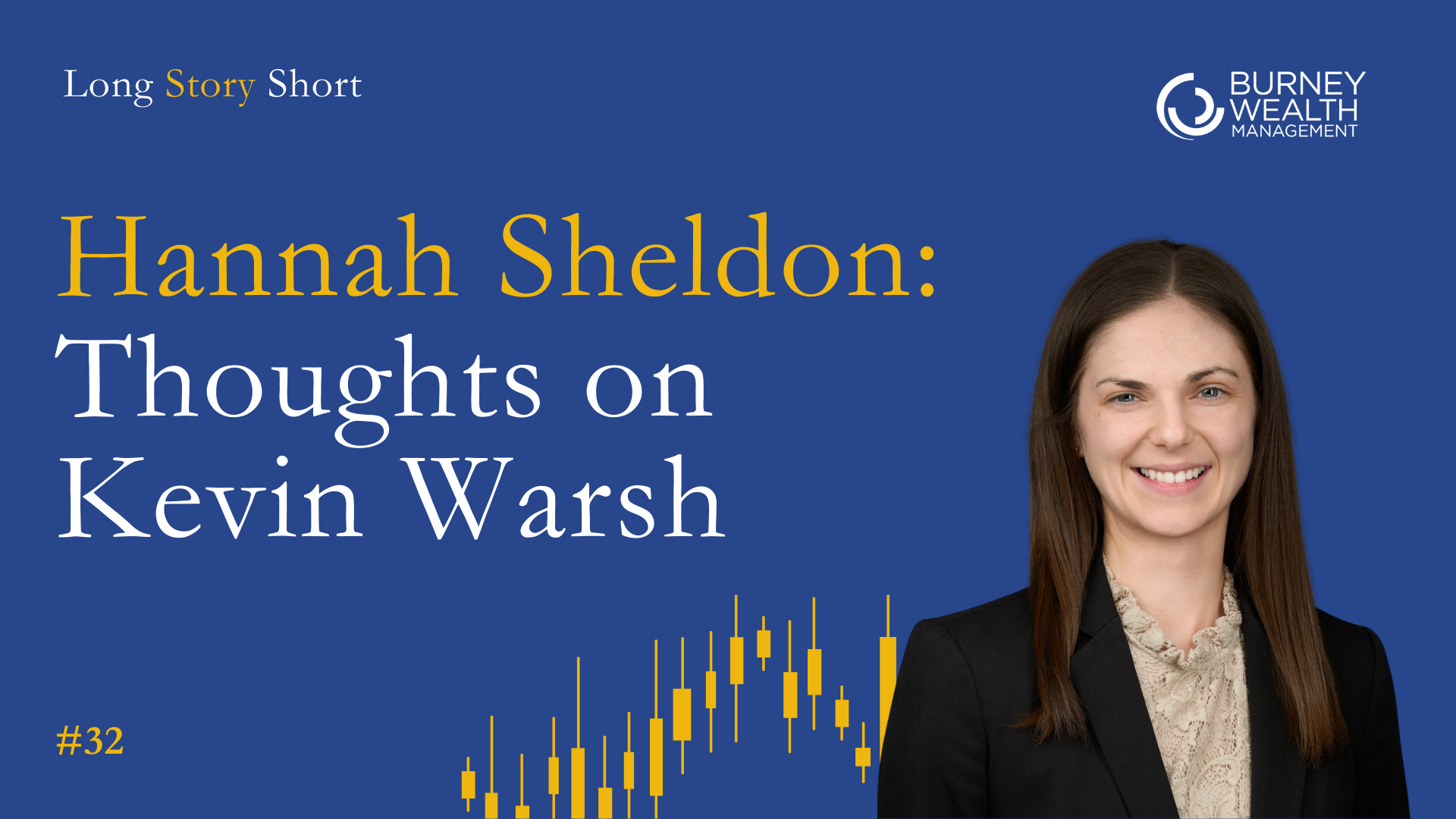



Burney Research Analyst Hannah Sheldon talks about New Fed Chair Kevin Warsh’s Nomination | Ep 32
Watch or listen to the episode below:
This episode started with big news from the end of last week. Kevin Warsh got nominated to replace Jerome Powell as Fed chair, and we had a uniquely qualified guest speaker to explain what it means.
Hannah Sheldon joined Burney as a research analyst just weeks before the nomination. She spent time working inside the Fed as a financial institution policy analyst. She shared a LinkedIn post analyzing Warsh that caught Andy's attention, which made her the perfect guest for this conversation.
The Fed Chair Pick
Warsh brings solid credentials. He served as a Fed governor during the financial crisis and helped navigate the economy through that mess. Trump made clear he wouldn't nominate anyone unwilling to lower interest rates, which seems at odds with Warsh's history as an inflation hawk.
Hannah explains how Warsh squares that circle. He believes AI is disinflationary. Combined with deregulation and tax policy changes, he thinks economic growth can happen without sparking inflation. If you're not worried about inflation, cutting rates becomes easier.
The more complicated piece involves the Fed's balance sheet. Warsh wants to shrink it substantially. The Fed's balance sheet hit nearly $9 trillion at its peak and has come down but remains historically massive. Before the financial crisis, the Fed had a tiny balance sheet and didn't use it as a primary monetary policy tool.
Reducing the balance sheet means selling treasuries. Banks buy those treasuries with cash, which means less money available for lending. Less lending means less credit flowing through the economy. That's contractionary, the opposite effect of cutting interest rates.
How Warsh reconciles these competing goals will define his tenure if confirmed. Hannah expects the focus on interest rates as the primary tool (rather than balance sheet management) should help private markets and drive strong growth.
When Bubbles Pop
The silver conversation came up because it needed to. Andy's father-in-law was quoting silver prices in real time over Christmas. That's usually the sign of a top, and sure enough, silver cratered spectacularly last week.
This pattern repeats constantly. Something goes up fast, people who don't normally invest in that thing suddenly pile in, and then it collapses. Meme stocks. Crypto. ARK Innovation funds in 2021.
The ARK example is particularly instructive. Cathie Wood became a household name when her innovation-focused ETFs were returning triple-digit gains. People treated her like the next star fund manager. Most of the money flowed in near the peak.
If you look at what the average investor actually achieved investing in those funds (as opposed to what the funds themselves returned from inception), most people are underwater. They bought high and sold low or are still holding losses.
Commodities like silver and gold operate purely on supply and demand, disconnected from fundamentals like cash flow or earnings. You need to be prepared for volatility.
Adam made a crucial distinction: speculator, trader, or investor. Those are three different investment approaches. At Burney Wealth, we consider ourselves and our clients as investors. That path aims for long-term success without requiring perfect timing on whatever theme currently dominates headlines.
Making Tier One Capital Bulletproof
Our last episode introduced tier one (money you'll need to live on) versus tier two (money that will outlive you) retirement savings. This episode dug into how to make sure tier one capital can actually do its job.
Most people can estimate annual spending with reasonable accuracy. Two things trip them up: expenses outside their regular budget and stress testing against market crashes.
Healthcare expenses represent the biggest wildcard. Medicare doesn't cover everything. Long-term care, private rooms in assisted living facilities, and memory care costs vary dramatically by location and level of service. Fidelity's research suggests a 65-year-old couple should plan for at least $250,000 per spouse for out-of-pocket healthcare and potential long-term care expenses in today's dollars.
Healthcare inflation runs around 5-6% compared to general inflation around 3%. That gap compounds significantly over a 30-year retirement. Building that buffer into tier one retirement capital prevents having to tap tier two money earmarked for family or charity.
Home repairs, roof replacements, and other major one-off expenses need similar cushions. Planners generally know how much buffer clients need based on home value, age, and location.
The second piece involves return and inflation assumptions. Using historical market returns (9-10%) and low inflation (2-3%) in retirement projections essentially relies on the market to fund retirement. That's precarious.
Conservative planning uses lower expected returns and slightly higher inflation rates. This adds another layer of protection. Things usually end up better than worst-case scenarios, which is fine. You can adjust annually as reality unfolds.
When Bad Markets Hit at Exactly the Wrong Time
Sequence of return risk matters enormously. If you retire and the market crashes 50% the next day while you're drawing 5% annually from your portfolio, you're suddenly withdrawing a much larger percentage of a much smaller balance. That's how plans get destroyed.
This is why clients often ask, I've been 100% stocks while accumulating, and comfortable with volatility. Why can't I continue that way in retirement?
It depends on spending relative to portfolio size, time horizon, and other income sources. But for someone drawing a typical 5-6% annually, a major crash early in retirement creates permanent damage. Money withdrawn during the crash never gets a chance to recover.
Asset allocation protects against sequence risk. Diversifying into fixed income and alternatives means a market crash might drop your portfolio 20-25% instead of 50%. That difference is massive when you're simultaneously drawing for expenses.
The goal is eliminating surprises around expenses and balancing portfolios to weather terrible timing. Both are achievable with planning. Most retirement anxiety comes from not having quantified these risks and addressed them proactively.
Conservative assumptions usually mean things end up better than expected. That's preferable to optimistic assumptions that leave you scrambling when reality disappoints.
Listen to the full conversation on Long Story Short:
The Burney Company is an SEC-registered investment adviser. Burney Wealth Management is a division of the Burney Company. Registration with the SEC or any state securities authority does not imply that Burney Company or any of its principals or employees possesses a particular level of skill or training in the investment advisory business or any other business. Burney Company does not provide legal, tax, or accounting advice, but offers it through third parties. Before making any financial decisions, clients should consult their legal and/or tax advisors.